Skip to content
gear

Cameras

Camera bodies for photo and video — compact enough to carry everywhere, capable enough for coursework, events, and personal projects.

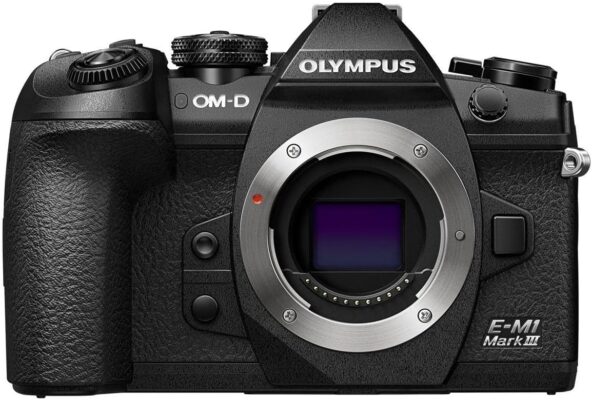
Olympus OM-D E-M1 Mark III Mirrorless Camera
Cameras

Olympus OM-D E-M1 Mark III Mirrorless Camera

A professional-grade Micro Four Thirds mirrorless camera built for photographers who need pro-level performance in a body they can actually carry all day. Imagine this: you're the only one covering the event, but the org wants both — an aftermovie for social media and clean photos for the yearbook, shot back to back with no time to swap cameras. That's exactly what this camera is built for: pro-grade 4K video and serious still-photo performance from the same body, so you're not choosing between the moment and the motion. 20.4MP Sensor and TruePic IX Processor. The E-M1 Mark III pairs its Four Thirds sensor with Olympus's TruePic IX processor — the same engine used in the flagship E-M1X — for fast, accurate face and eye detection. Native ISO runs 200-25600, giving it real flexibility from bright daylight through dim indoor venues. 5-Axis In-Body Stabilization. Built-in sensor-shift stabilization compensates for up to 7 stops of camera shake on its own — up to 7.5 stops when paired with a compatible Sync IS lens — making sharp handheld shots possible well below the shutter speeds a tripod would normally demand. 121-Point Cross-Type Autofocus. Every autofocus point on the E-M1 Mark III is cross-type and covers the full frame, so fast-moving subjects stay locked in whether they're centered or near the edge. Continuous shooting hits up to 60fps with the electronic shutter or 15fps mechanically. 4K Video and Silent Shooting. DCI/UHD 4K recording tops out at 60fps, and the fully silent electronic shutter makes the camera useful in settings — recitals, ceremonies, quiet interviews — where a mechanical shutter's click would be a problem. Weather-Sealed Body Design. A magnesium-alloy shell sealed against dust, splashes, and freezing temperatures means the camera can handle real outdoor conditions, not just fair-weather shooting. The 3-inch fully articulating touchscreen and 2.36M-dot OLED viewfinder cover both handheld and tripod-mounted shooting comfortably. Storage and Battery. Dual UHS-II SD card slots let you shoot to both simultaneously for backup, or split stills and video across them. The BLH-1 battery is rated for roughly 420 shots per charge — plan on a spare for a full day out. https://www.youtube.com/watch?v=sDTGtJL0awg Manual See Real Photos Shot on This Camera (Flickr Gallery) Setup Tutorial — Get Every Menu Dialed In

Log in to see pricing
View Details →
Olympus OM-D E-M5 Mark II Mirrorless Camera
Cameras

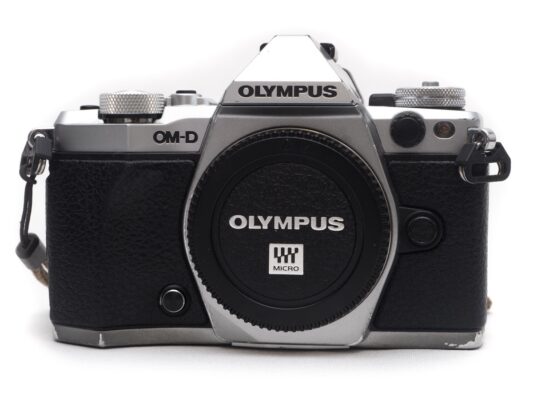
Olympus OM-D E-M5 Mark II Mirrorless Camera

A compact, retro-styled Micro Four Thirds mirrorless camera built for photographers who want serious image quality without a bulky body — it earned the EISA Award for Best European Prosumer Compact System Camera the year it launched. Imagine this: some venues restrict "professional-looking" cameras — big lenses, big bodies, obvious press gear. A small, retro-styled body like this one usually isn't what anyone's watching for, so real image quality gets in anyway. That's the E-M5 Mark II's appeal for a school's yearbook or photography club too — light enough for all-day carry, weather-sealed for intramurals or a rainy campus fair, and unassuming enough to shoot without drawing attention. 16MP Sensor and TruePic VII Processor. The E-M5 Mark II pairs a 16-megapixel Four Thirds sensor with Olympus's TruePic VII processor for accurate color and detail. Native ISO runs 100-25600, giving it real flexibility from bright daylight through dim indoor gyms and auditoriums. 5-Axis In-Body Stabilization. Built-in sensor-shift stabilization compensates for up to 5 stops of camera shake on its own, making sharp handheld shots possible in low light without a tripod — useful for indoor events where flash isn't allowed. 81-Point Autofocus. 81 contrast-detect autofocus points cover the frame, keeping moving subjects in focus for anything from a sports day to a stage performance. Continuous shooting hits up to 10fps. 40MP High Res Shot Mode. A sensor-shift High Res mode combines multiple exposures into a single 40-megapixel composite for static subjects — ideal for yearbook portraits, product shots, or anything that benefits from extra detail beyond the sensor's native 16 megapixels. Weather-Sealed, Compact Body. A dustproof and splashproof magnesium-alloy body handles outdoor shooting without the bulk of a full-size DSLR — light enough to carry all day, sturdy enough for a rainy campus fair or an outdoor sports event. Vari-Angle Touchscreen and Electronic Viewfinder. A 3-inch vari-angle touchscreen flips out for high, low, or selfie-style angles, and the 2.36-million-dot electronic viewfinder gives a bright, accurate preview in direct sunlight where a screen alone can wash out. https://www.youtube.com/watch?v=0uQKYgQaNHQ Manual See Real Photos Shot on This Camera (Flickr Gallery) In-Depth Overview — Every Menu and Setting Explained

Log in to see pricing
View Details →
Panasonic Lumix DMC-GX85 Mirrorless Camera
Cameras

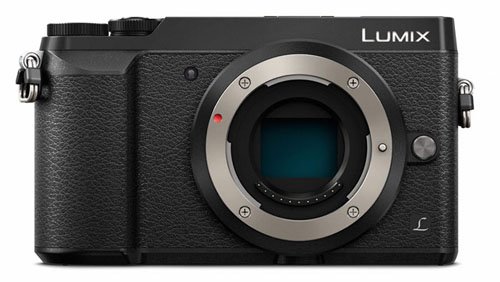
Panasonic Lumix DMC-GX85 Mirrorless Camera

A compact, rangefinder-style Micro Four Thirds mirrorless camera that punches well above its size — it was named ePHOTOzine's Compact Mirrorless Camera of the Year the year it launched. Imagine this: you're new to the photography club, the budget doesn't stretch to a full-size body, and lugging a bulky rig between classes isn't realistic anyway. That's exactly where this camera fits — small enough to carry all day, simple enough to pick up fast, and still capable of real image quality once you're ready to grow into it. 16MP Sensor With No Anti-Aliasing Filter. Dropping the AA filter — unusual for its time — means sharper, more detailed images straight out of the camera, at the same 16-megapixel Four Thirds sensor size used across this generation of Panasonic bodies. 5-Axis Dual I.S. Stabilization. In-body 5-axis stabilization works together with compatible lenses' own optical stabilization for a combined "Dual I.S." system, keeping handheld shots steady in lower light than the sensor alone could manage. Shutter-Shock-Reducing Design. A redesigned shutter mechanism cuts down on the micro-blur ("shutter shock") that smaller mirrorless bodies are prone to, so shots stay sharp at shutter speeds where older designs would soften. 4K Video and 4K Photo Mode. Records 4K video at up to 30fps, and 4K Photo mode shoots continuous 8-megapixel stills at 30fps pulled straight from 4K footage — useful for catching a fast, unpredictable moment without guessing the exact instant to press the shutter. Compact Rangefinder-Style Body. A flat-top, viewfinder-in-the-corner body shape keeps the whole kit small and light without folding away the electronic viewfinder some compact cameras skip entirely. Tilting Touchscreen Display. A 3-inch tilting touchscreen makes low and high-angle shots easier to frame, and doubles as a fast way to move the focus point or trigger the shutter with a tap. https://www.youtube.com/watch?v=h-ZGajk9aBE Manual See Real Photos Shot on This Camera (Flickr Gallery) Panasonic GX85/GX80 Hands-On Field Test

Log in to see pricing
View Details →
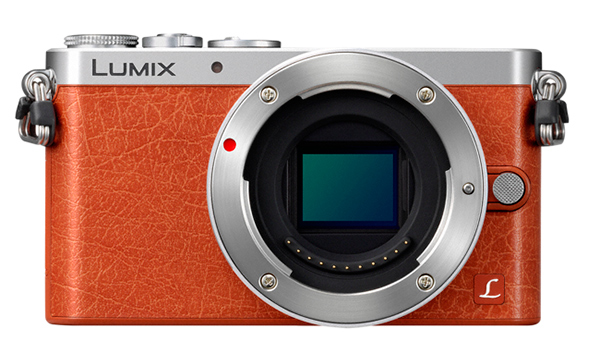
Panasonic Lumix DMC-GM1 Mirrorless Camera
Cameras

Panasonic Lumix DMC-GM1 Mirrorless Camera

A Micro Four Thirds mirrorless camera so small it was the smallest and lightest interchangeable-lens camera in the world when it launched — a record it held for years afterward. Imagine this: you're heading out for the day and can't decide whether to bring a "real" camera at all, because anything with interchangeable lenses usually means a bag, a strap, a whole production. This one doesn't ask that question — it's smaller than a lot of point-and-shoots, so there's no real reason to leave it behind. Engineered for Minimum Size. Panasonic shrank the internal circuitry by around 30% and redesigned the shutter mechanism from the ground up just to get this body as small as it is, without dropping to a smaller sensor to do it — the magnesium-alloy shell keeps it feeling solid despite the size. 16MP Sensor With No Anti-Aliasing Filter. The same Four Thirds sensor size used across this generation of Panasonic bodies, without an AA filter softening the detail — sharper images straight out of the camera. Compact Shutter Mechanism. A miniaturized, stepping-motor-driven shutter is part of what makes the small body possible; mechanical shutter tops out at 1/500s, and switching to the electronic shutter extends that to 1/16000s for bright daylight or wide apertures. Full HD Video. Records 1080p video up to 30fps — enough for everyday clips and social posts without needing to touch a separate video camera. Touchscreen-Driven Controls. There's no viewfinder to make room for — everything is framed and controlled through the fixed 3-inch touchscreen, which keeps the learning curve short for anyone picking up a camera with interchangeable lenses for the first time. Built-In Wi-Fi. Transfer photos to a phone right after shooting, without pulling an SD card or plugging in a cable. https://www.youtube.com/watch?v=82QnB3DmE0s Manual See Real Photos Shot on This Camera (Flickr Gallery) World's SMALLEST M43 camera

Log in to see pricing
View Details →
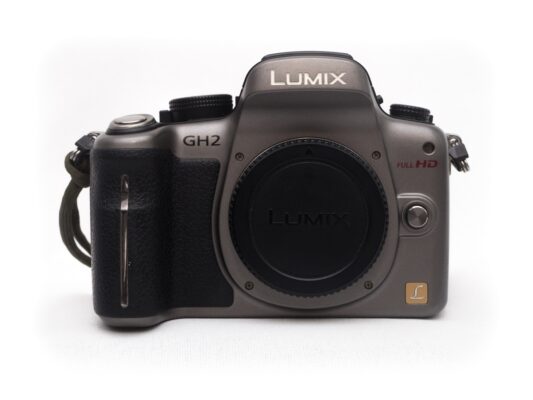
Panasonic Lumix DMC-GH2 Mirrorless Camera
Cameras

Panasonic Lumix DMC-GH2 Mirrorless Camera

A Micro Four Thirds mirrorless camera that treated video as seriously as stills years before that was standard — it won TIPA's 2011 "Compact System Camera Expert" award, praised as "a true hybrid photo and video camera." A favorite among early hybrid shooters for a reason: this was one of the first cameras to treat video as a real, first-class feature instead of an afterthought bolted onto a photo camera. That still holds up for a school AV club or student filmmaker who wants real manual control over exposure and focus — something a phone or basic point-and-shoot won't give them — without the price tag of newer gear. Full HD Hybrid Video. Records Full HD 1080 video up to 60p/60i, with full manual control over aperture, shutter speed, and focus while recording — the reason this camera became a favorite for anyone shooting more than casual clips. 16MP Multi-Aspect Sensor. An 18-megapixel sensor with a multi-aspect design outputs a full 16 effective megapixels regardless of aspect ratio, so switching between 4:3, 3:2, and 16:9 doesn't cost field of view the way it does on most cameras. Fast Contrast-Detect Autofocus. Panasonic rated this camera's autofocus at around 0.1 seconds with compatible lenses — competitive with phase-detection SLRs of the time — and it's still quick enough for casual action and street shooting today. High-Resolution Electronic Viewfinder. A 1.53M-dot equivalent EVF with 100% field of view was considered one of the best viewfinders on any camera at launch, and still holds up well for framing in bright daylight. Free-Angle Articulating LCD. The 3-inch screen swings out and rotates to almost any angle, useful for low shots, high shots, or filming yourself directly — well ahead of the fixed and simple-tilt screens common on cameras from this era. Full Manual Video Control. Aperture, shutter speed, and ISO are all adjustable mid-recording, not locked to an automatic mode the way many hybrid cameras of this era treated video. https://www.youtube.com/watch?v=HyhktKmXVUA Manual See Real Photos Shot on This Camera (Flickr Gallery) 4K 50/60p With The Lumix GH2 | Orion Hack Review and Setup Guide

Log in to see pricing
View Details →